
Because Oct. 7 overlapped with the first day of Sukkot when school was closed, the Programming Council alongside the administration held a meaningful memorial on Oct. 16, the Hebrew date of the Oct. 7 attacks, full of song, prayer and story-telling.
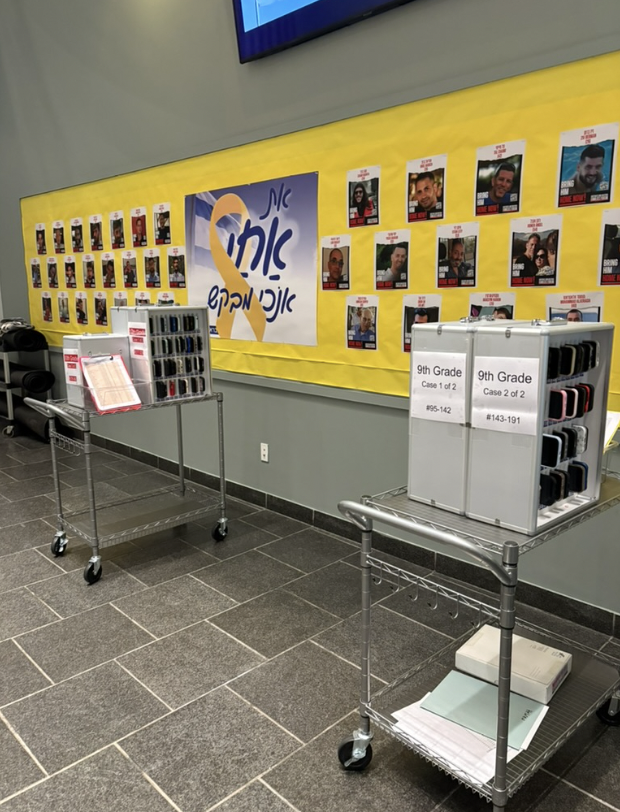
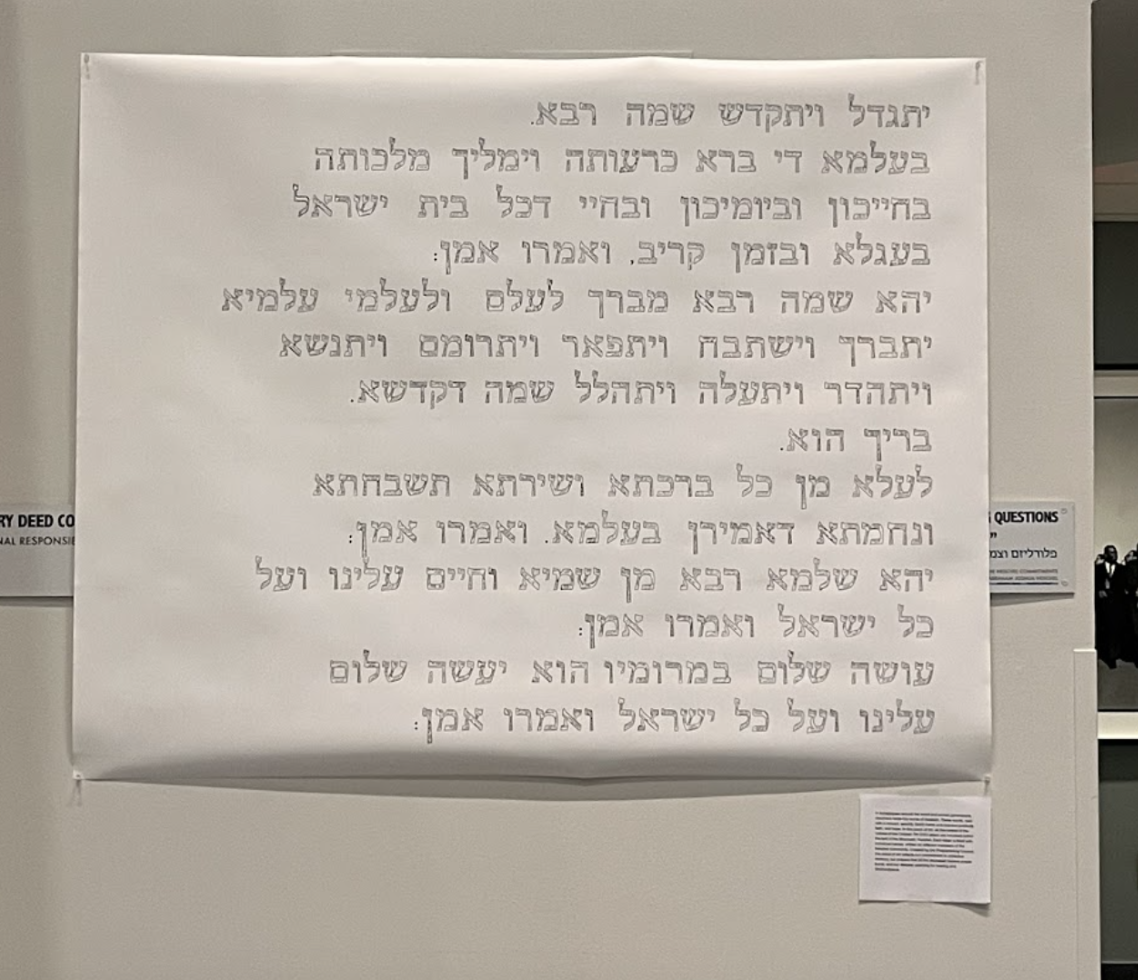
As students and faculty entered the atrium in the morning, they were met with a table draped in an Israeli flag, a yahrzeit candle, and an artistic banner commemorating the victims of the massacre.
Junior Alex White, who spearheaded the banner’s creation, said, “We decided to write names of people who were murdered and taken hostage on Oct. 7 inside the mourners’ kaddish.”
As the high school gathered in the gym, images from Oct. 7 cycled on the screen and Eden Litt, Eloise Vaynshtock, and Eli Lebwohl performed “Nachamu, Nachamu,” a song about hope, comfort, and resilience. After observing a moment of silence, Co-Vice Presidents of the Programming Council, seniors Maddie Friedland and Liam Bahar, delivered opening speeches and introduced established Israeli journalist Lee Yaron.
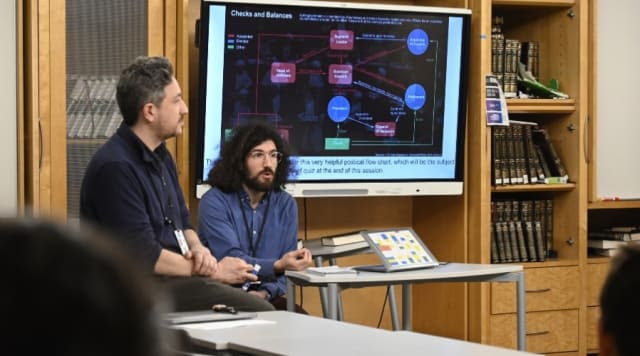
Yaron, a writer for Haaretz, spoke during the second half of the ceremony. She talked about her new book, 10/7: 100 Human Stories, an account of Oct. 7, 2023, published roughly a year later. Yaron spent the year proceeding Oct. 7 meeting with the families of hostages and conducting hundreds of interviews to gain an understanding of their lives – sometimes going back three generations to the time when their families first came to Israel. She studied and explored their many relationships: familial, professional, and even doctor-patient. The book commemorates communities impacted by Hamas’ attacks; it uniquely and importantly focuses on the hostages’ lives and family histories rather than solely their victimhood.
Guided by Rabbi Jonathan’s questions, Yaron described the process and impact of writing such an account; as a journalist, she is used to not getting personally involved in her reporting. But a topic like this, she explained, took a heavy emotional toll.
When compiling the book, she decided to report on a diverse array of communities hurt by Hamas’ terrorism (Arab-Israelies, Palestinian-Israelies, Ukrainian refugees, etc.) that aren’t always showcased in the media. She explained that for some less-connected bereaved families, she “was the first journalist to ask [them any questions].”
Senior Zachary Altman said, “I thought the program was meaningful, and I liked hearing from the perspective of a journalist.”
Rabbi Dahlia ended the program by leading the room in Hatikva, the Israeli national anthem, and then students made their way to class.